Blocking Before Breath: The Case for a Rehearsed Dry Run in UK Underwater Editorial
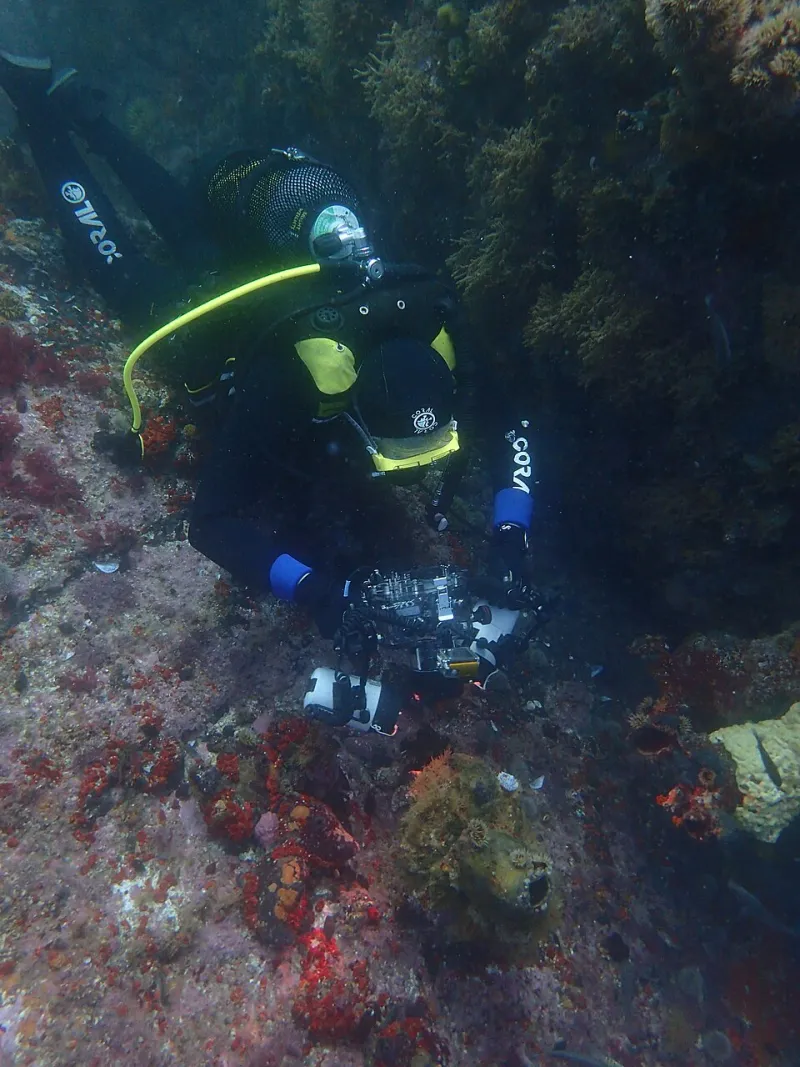
Photo: Peter Southwood, CC BY-SA 4.0, via Wikimedia Commons
The dry run is production craft, not a formality
In UK underwater editorial, water time is the most expensive and least forgiving resource on the schedule. Pool hire, tank access, safety cover, heating, transport and crew hours all converge on a narrow window in which the performer is wet, the camera is housed and the light is behaving. A dry run on land does not remove the unpredictability of water, but it does remove the avoidable kind. It turns the pool day from a first attempt into a controlled execution.
The distinction matters because underwater fetish editorial depends on atmosphere and precision at the same time. The images need to feel submerged, weighted and intentional. That effect is rarely achieved by arriving at the poolside with a mood board and hoping the water cooperates. It is achieved by rehearsing the sequence, the wardrobe, the signals and the shot list before anyone enters the water. In 2026, with UK studio costs under pressure and safety expectations rightly high, the dry run is not bureaucratic padding. It is production craft.
Start with the shot list, not the stopwatch
A useful dry run begins with the shot list under stress. The producer, photographer, performer and safety diver should walk through the planned sequence in order, not simply read it aloud. Which image opens the set? Where is the performer positioned relative to the camera and the light? What happens between the hero frames? Which moments require a surface breath, a reset or a change of wardrobe?
This is where weak plans reveal themselves. A shot that looks straightforward on paper may require the performer to turn under a fixed light, or to hold a pose while fabric drifts in a direction nobody has tested. A sequence that assumes three quick wardrobe changes may ignore the time needed to dry hands, reset straps and check that nothing has become tangled. The dry run should produce annotations: timings, camera positions, safety sightlines and a clear order of operations. Those notes are what save tank time later.
Blocking bodies, fabric and props on dry land
Movement blocking is not only about where the performer stands. It is about how the body travels through the frame, how the fabric follows, how the hair behaves and where the props sit when the water is no longer holding them in place. A dry room with mirrors, tape marks and a clear floor can expose problems that would otherwise consume water time.
Wardrobe deserves particular attention. Underwater fetish editorial often relies on straps, mesh, latex, neoprene, lace, chains or weighted garments, and each material behaves differently when wet. The dry run should test fastenings, pinch points, quick-release access and the way a garment sits when the performer lifts an arm or arches back. Weighting can be discussed and roughly positioned on land, then refined in shallow water. The point is not to simulate the entire shoot, but to identify the five or six decisions that would otherwise be made in deep water with the clock running.
Props should be handled, not merely listed. If a prop is meant to sink, float, trail or remain just below the surface, the dry run should establish who is responsible for it, where it is stored between frames and how it is recovered without disrupting the performer. The best prop is the one that has already failed safely on land before it is asked to behave in a tank.
Breath timing without turning rehearsal into a breath-hold contest
Breath timing is central to underwater work, but a dry run should not become an endurance exercise. The purpose is to rehearse cues, signalling and the rhythm of the sequence, not to test how long anyone can hold their breath on land. Prolonged breath-holding drills outside supervised water practice are not a sensible part of a production meeting, and hyperventilation has no place in a professional dry run.
What can be rehearsed is the choreography of breath: when the performer takes a final surface breath, how the safety diver acknowledges readiness, how the photographer signals the start of a take, and how the sequence ends. Counted cue patterns, hand signals and visual checks can all be practised dry. The performer should be able to say, without ambiguity, what happens if they need to stop. The crew should be able to repeat that answer back.
Safety language and stop signals
Every dry run should include a short, explicit check of safety language. Safe words, taps, hand signals and visual cues should be agreed and demonstrated. The person empowered to call a stop should be named, and everyone should know that the call does not require justification in the moment. If the shoot involves restraint, breath play or any other fetish element, the dry run is the correct place to confirm boundaries, release protocols and aftercare expectations before the water adds pressure.
The safety diver should be briefed in person, not by forwarded email. Their sightlines, entry points and communication with the surface crew should be walked through. A dry run that ignores the safety team is not a rehearsal; it is a production meeting with a blind spot.
The paperwork that makes rehearsal useful
The dry run should leave a paper trail: an updated shot list, a realistic timing estimate, a wardrobe and props checklist, a revised risk assessment and method statement where needed, and a call sheet that reflects what was actually learned. These documents are not glamorous, but they are what allow a UK producer to justify the cost of rehearsal to a client or studio. They also give the performer a clearer picture of the day, which is itself a safety measure.
When the dry run is done well, the pool day feels quieter. There is less shouting, fewer hasty adjustments and more room for the performer to inhabit the frame. The images may still depend on water, light and chance, but the production no longer depends on chaos. That is the standard Underwater Girl believes UK underwater editorial should be measured against in 2026.
When to abandon the dry run
A dry run should have an exit condition. If the signals are unclear, if a garment cannot be made safe, if the breath plan is unrealistic or if the safety team cannot see the sequence working, the correct response is to change the plan before the water does it for you. Rehearsal is not a ritual of confidence. It is a test, and a test that cannot fail is not doing its job.