Against the Fairytale Tide: Preserving Adult Intent in UK Underwater Fetish Editorial
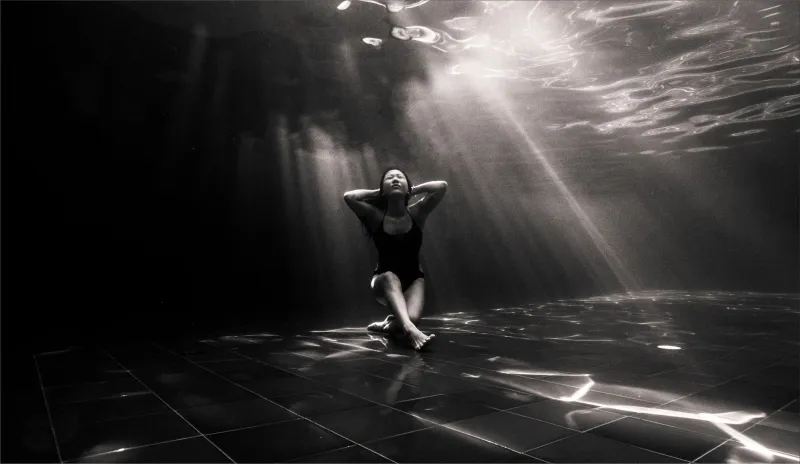
Underwater photography has always carried a certain mythology. The pool, the tank and the blacked-out studio can produce images that feel suspended between worlds, and that quality has obvious appeal for glamour and fetish work. The difficulty arises when that atmospheric charge is allowed to harden into a fantasy narrative. In UK underwater fetish editorial, the drift towards mermaid styling, fairy-tale props and ethereal aquatic iconography is not merely a matter of taste. It can weaken the adult language of the work and confuse the audience the site exists to serve.
This is not an argument against beauty, atmosphere or theatricality. It is an argument for discipline. Underwater Girl occupies a specialist space: adult audiences arrive expecting fetish imagery that is recognisably adult, not a costumed aquatic tableau with adult content bolted on. The distinction matters commercially and editorially, and UK producers are better placed to protect it than to follow the tide.
Atmosphere Is Not Allegory
A mermaid shoot is not simply an underwater shoot with a tail. It is a set of visual codes: iridescent scales, shell-like coverings, floating hair, a passive upward gaze and a general suggestion of mythic suspension. Those codes are effective in their own genre, but they pull fetish editorial towards allegory. The viewer is invited to read the image as a story about a creature, rather than as an image about a person, a garment, a restraint or a power dynamic.
Fetish imagery depends on specificity. Material, fit, fastening, posture and gaze all carry meaning. When a tail replaces a harness, or when a sea-witch aesthetic replaces a clear adult styling decision, the visual grammar becomes softer and less precise. The work may still be attractive, but it is no longer speaking the same language. UK producers should ask a simple question of every frame: what adult idea is being expressed here, and would it survive if the water were removed?
Styling That Keeps Its Adult Edge
Styling is the first and most practical line of defence. Instead of shell-inspired pieces and iridescent fabrics, consider materials that already belong to adult and fetish visual culture: latex, neoprene, heavy mesh, structured corsetry, leather harnesses and weighted garments that behave interestingly underwater. A black latex piece against pale pool tile will read as adult far more reliably than a shimmering aquatic costume.
UK sourcing is part of the editorial argument. A garment made by a small British latex or fetish-wear maker carries a different visual authority from a generic fantasy costume, and it can be discussed in the accompanying text without breaking the adult frame. Colour should be controlled rather than decorative. Slate, oxblood, black, deep green and bone will hold their identity under water; pastel aquatics tend to dissolve into the same turquoise wash that makes so much underwater imagery forgettable.
Makeup and hair should support the same logic. Waterproof definition around the eyes, a controlled hairline and a deliberate approach to wet hair will keep the performer looking styled rather than merely submerged. The aim is not to remove glamour. It is to make glamour serve adult intent rather than replace it.
Direction: Pose, Gaze and Power
Pose direction is where fantasy drift often becomes most visible. The floating damsel, the upward-reaching siren and the passive drift are all easy defaults, but they tend to erase the performer's agency. Adult fetish editorial is more compelling when the body is doing something deliberate: holding a bound position, meeting the camera's gaze, controlling an ascent, or using the water's resistance as part of the restraint.
Breath-hold work should be treated as a skill and a boundary, not a mystical state. Clear hand signals, a rehearsed dry run and a safety diver or spotter are not interruptions to the fantasy; they are the conditions that make adult work possible. The same applies to aftercare and communication. A performer who is warm, briefed and in control will read differently on camera from one who is simply being asked to endure.
Producers should also resist the temptation to direct every frame towards prettiness. A clenched hand, a tightened strap or a direct look can carry more adult charge than a perfectly serene floating pose. The water is already doing atmospheric work. The direction should do the rest.
Set Dressing and the Power of the Ordinary
Fantasy drift is often amplified by set dressing. Sunken treasure, fake coral, starfish and scattered pearls all announce a fairy tale before the performer has done anything. They also tend to look cheap under water, where colour and texture are already compromised.
A more adult approach is to use the ordinary architecture of a UK pool or tank: tiled walls, lane ropes, ladders, painted depth markings and the hard lines of the tank edge. These elements are not neutral, but they are honest. They place the performer in a real environment and allow the fetish language to do the imaginative work. A single weighted prop, a harness, a length of rope or a piece of industrial mesh will usually say more than a crate of aquatic decorations.
This is also a practical point for UK producers working with limited pool time. Minimal sets are faster to rig, safer to manage and easier to light consistently. The water itself is the production value. It does not need help from a plastic mermaid.
Edit Choices That Protect the Frame
Post-production can either reinforce adult intent or undo it. Adding scales, intensified bubbles, fantasy colour grades and composite sea-creature elements will push the work back towards illustration. A more disciplined edit preserves skin texture, water distortion and the material qualities of the garment. Colour grading should be neutral or deliberately desaturated rather than pushed towards a generic aqua fantasy palette.
Sequencing matters too. If the edit includes preparation, breath control, adjustment of a strap or the quiet moments after a hold, the viewer is reminded that this is adult work made by adults. That framing is not a concession to documentary. It is part of the editorial voice. For a site such as Underwater Girl, that voice is an asset. It distinguishes specialist adult work from the much larger supply of underwater imagery that is atmospheric but not adult.
The Commercial and Editorial Case
There is a temptation to assume that fantasy imagery broadens appeal. In practice, it often blurs the offer. Adult audiences who seek underwater fetish editorial are not well served by work that looks like a costume shoot with occasional adult details. They respond to clarity, material specificity and a sense of controlled adult intent. UK producers who protect that clarity are not narrowing their audience; they are identifying it.
The water is strange enough on its own. It does not need mermaids, sea witches or fairy-tale props to make it compelling. What it needs is a clear adult frame, a performer with agency and a production that knows the difference between atmosphere and allegory. In 2026, with underwater imagery more accessible than ever, that distinction is not a purist concern. It is the editorial standard that keeps the work recognisably adult.