Direction at a Distance: Keeping Consent and Craft Intact When the Client Watches from a Screen
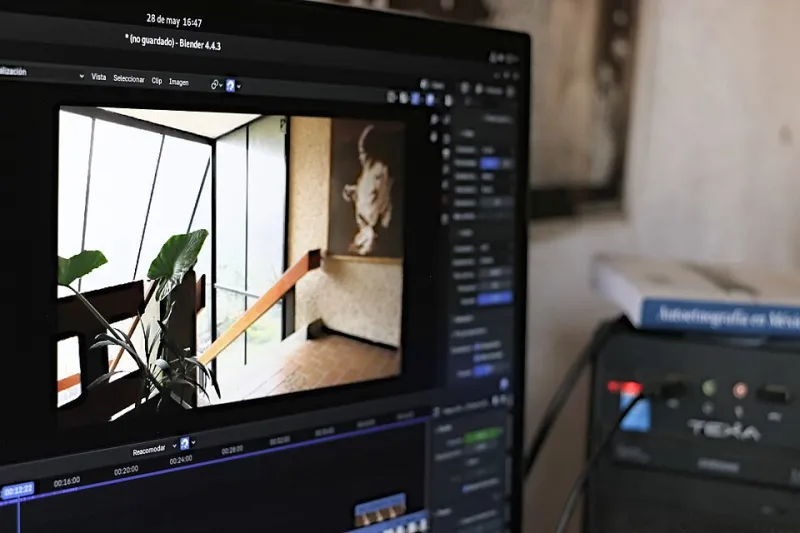
Photo: Ehécatl Cabrera, CC BY 4.0, via Wikimedia Commons
Remote direction is now ordinary in UK underwater adult editorial. A creative director may be in Manchester, a client in London, a producer at a pool in the Midlands. The video link carries the frame, the notes and the approval. It can work beautifully. It can also hollow out the set if the people in the room are treated as a relay station rather than the owners of the shoot. The difference is design.
The appeal of the remote eye
Remote direction gives clients access without travel and allows a specialist director to oversee a production they could not otherwise attend. It can be efficient, especially for a one-day editorial with a tight budget. But efficiency is not the same as control. A screen shows a frame; it does not show the performer's breathing, the temperature of the water or the mood in the room.
A screen is not a set
Video links compress. They miss the pause before a performer says yes, the glance at the safety diver, the slight shake that suggests cold. A remote director may see a good image and ask for one more take without seeing the cost. That is not malice; it is the natural consequence of distance. The on-set team must therefore be empowered to translate, delay or refuse a remote request when the local conditions make it unsafe or outside consent.
Designing the chain of command
Before the first submersion, the shoot should have a named on-set director or producer with final authority over safety and consent. The remote client can hold creative approval, but not the power to override a stop. This should be written into the call sheet and repeated in the pre-shoot briefing. The performer should know who speaks to them, who can call a halt and how a remote note will be relayed. A chain of command that exists only in an email thread is not a chain of command.
Consent cues need a local owner
Consent on an underwater set is physical and immediate. It may be a hand signal, a look, a rehearsed phrase before entry. A video link can carry a thumbs-up, but it cannot reliably carry hesitation. The local consent lead should be responsible for checking in before each block and for relaying any change in boundaries to the remote director. If the performer withdraws consent for a setup, the message must travel faster than the next creative note. No screen should be allowed to create a queue for a boundary.
Hand signals, relay and the risk of drift
Hand signals are already vulnerable at depth; through a monitor they can drift. A signal that means 'I need a break' on set may be read as 'hold the pose' by a remote viewer. The solution is a small, rehearsed vocabulary and a relay role. One person should own communication between the remote director and the set, repeating notes back and confirming them. The relay should be able to say 'not now' without apology. Drift is not a technical glitch; it is a consent risk.
Monitor setups and approval latency
Remote approval adds latency. The client sees the frame after it is captured, comments after the performer has surfaced, and expects a response after the crew has already moved on. The schedule should include review windows with a stable monitor, good audio and a clear handover. Do not ask a wet performer to wait on a dry approval. Use a dry stand-in, a lighting check or a wardrobe reset to cover the gap. If the link drops, the on-set team should have a default: continue with the approved shot list or pause. Improvisation under a dead link is how consent cues get lost.
The performer's veto must travel down the line
The performer's right to stop does not diminish because the client is remote. It should be repeated at the start of the day and checked before each block. If a performer is uncomfortable with a remote note, the local director should be able to say so plainly and without negotiation in the water. The remote client can discuss it on dry land, after the performer has had a break. A veto that has to travel through three people and a buffering video call is not a veto.
A pre-shoot protocol for remote direction
A practical protocol is modest. Name the local authority. Name the consent lead. Agree a relay vocabulary. Set review windows. Confirm that the remote client cannot direct the performer directly unless that has been explicitly agreed. Test the link before the water is disturbed. Keep a written log of notes and approvals. And agree a stop rule: if the link fails, the safety lead's judgement prevails.
When to stop
Remote direction is at its best when it gives the set a clear creative spine and then trusts the room. It is at its worst when the screen becomes a substitute for presence and the on-set team becomes a call centre. The test is simple: if the link went dark, would the shoot still be safe, consensual and coherent? If the answer is no, the problem is not the technology. It is the design.