Paper as Protective Gear: The Compliance File Every UK Underwater Set Should Carry

Photo by Photo by Yazid N on Unsplash on Unsplash
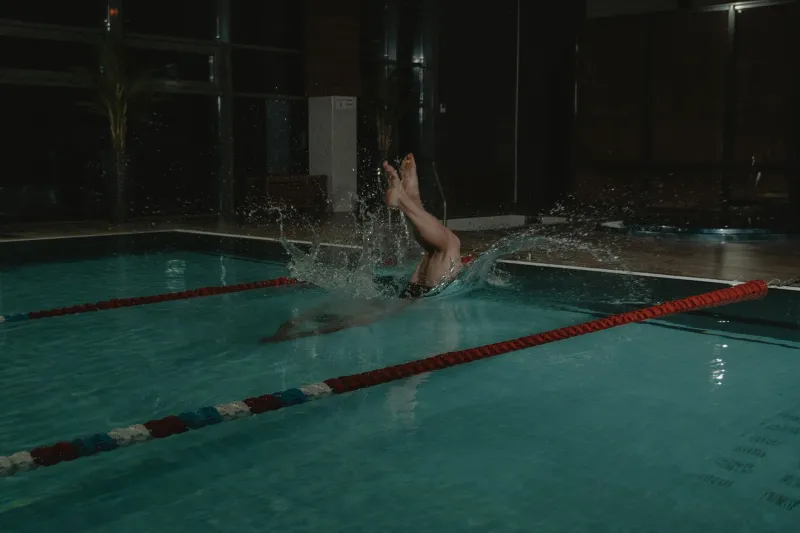
There is a moment on every well-run underwater set when the water is still, the lights are warm, and nobody is quite ready to begin. The photographer is checking a housing seal. The performer is standing dry, wrapped in a robe, reading something on a clipboard. That clipboard is not a delay. It is the first act of craft.
In UK underwater adult editorial, the administrative file is often discussed as if it were the opposite of creativity — a bureaucratic tax on an atmospheric form. The more useful view is that it is protective equipment. A regulator, a pool manager, an insurer or a performer's partner may never see the images, but they will all be affected by whether the file was assembled properly before anyone got wet.
Why the folder belongs in the kit bag
Underwater work compresses time. A shoot that might allow hours of negotiation on dry land has to fit around breath-hold windows, water temperature and the fatigue that follows a long submersion. Decisions made in that compressed window are rarely the best ones. Paperwork completed days earlier, in dry clothes and good light, gives everyone a clearer head when the clock is running.
There is also a commercial argument. UK pool operators, private tank owners and studio landlords are increasingly careful about who hires their water. A producer who arrives with a tidy folder — risk assessment, method statement, insurance certificate, performer identification and signed releases — is easier to say yes to than one who promises to sort it out afterwards. The file is a calling card.
The identity and age record
Every performer in UK adult content must be verifiably eighteen or over. That is not a formality to be satisfied by a verbal assurance or a social media profile. The standard is photographic identification bearing a date of birth — a passport, a photocard driving licence or a recognised proof-of-age card — checked in person, on the day, by a named person who records what they saw and when.
Good practice goes further. The check should be logged separately from the images, stored securely, and retained only as long as necessary for legal and insurance purposes. Under UK GDPR, identity documents are sensitive material; they should not sit in an unencrypted folder on a shared drive, and they should not be photographed on the same device that holds the shoot rushes. A simple register — name, date of check, document type, checking party, retention date — is enough. It should be completed before makeup, before wardrobe, and certainly before the first toe enters the water.
Releases and the explicit-content rider
A standard model release grants permission to use images. It does not, by itself, describe what those images will contain. For fetish and adult editorial, the release should be paired with a rider that sets out, in plain English, the nature of the content: underwater glamour, restrained movement, specific wardrobe, implied or explicit nudity as agreed, and any acts or props that have been discussed.
The rider should also state the limits. Which images may be published, on which platforms, in which territories, and for how long. Whether the performer may withdraw consent for future use, and how that request will be handled. Whether the material may be licensed to third parties. Whether it may be used in promotional compilations. These are not adversarial questions; they are the terms on which trust is built.
Consent is not a single signature. It is an ongoing agreement that can be narrowed or withdrawn, and the performer should be told so clearly. A release signed under time pressure, or presented for the first time at the poolside, is weaker than one read at home and returned with questions.
Location, pool and insurance permissions
A pool is not a neutral backdrop. It is a licensed premises with its own rules, its own insurance and its own reputation to protect. Before the shoot, the producer should hold written confirmation from the operator that underwater photography and adult content production are permitted, together with any conditions — supervision ratios, maximum numbers, noise restrictions, changing-room access and hours.
Public liability insurance is the other half of that permission. Most UK pool hire agreements require cover, commonly in the region of five million pounds, and the certificate should name the production and the date. Separate cover may be needed for equipment and for personal accident. The risk assessment and method statement should travel with the file, not remain on a laptop at home; a pool manager may ask to see them on the morning.
Handling footage that should never leak
The rushes from an underwater fetish shoot are among the most sensitive files a small UK production will handle. They deserve a written handling plan: who has access, where the files are stored, how they are backed up, when they will be deleted and what happens if a drive is lost.
Encryption, access lists and a retention schedule are basic hygiene. So is a clear rule that no material leaves the set on an unsecured device. If a performer asks for copies, provide them through an agreed channel and record the transfer. If a request to delete comes in, honour it promptly and confirm in writing. The file should be able to answer the question 'where is that footage now?' at any point in the following year.
The dry-run signing session
The most useful administrative habit is also the simplest: hold a short signing session before the shoot day, with the performer dry, dressed and unhurried. Walk through the release, the rider, the ID check and the handling plan. Invite questions. Note any changes in writing. Give the performer a copy to keep.
This session does two things at once. It produces a better file, and it sets the tone for the shoot itself. A performer who has read the terms and been listened to is more likely to speak up about cold water, a tight harness or a breath that needs a longer recovery. That is not a soft benefit. It is the difference between a set that runs on nerves and one that runs on clarity.
What a complete file contains
For reference, a well-assembled UK underwater production folder typically holds: photographic ID checks and an age register; signed model releases and explicit-content riders; a location permission letter and pool hire agreement; public liability and equipment insurance certificates; a risk assessment and method statement; a performer welfare and aftercare note; and a written data handling and retention plan. It should be indexed, dated and stored in one place.
None of this makes the images better in isolation. But it makes the conditions in which they are made more honest, and it protects the people who hold their breath for them. In underwater editorial, the surface is where the work begins. The file is part of that surface.