Surface Support, Creative Partner: The Case for Crediting the Safety Diver in UK Underwater Adult Editorial
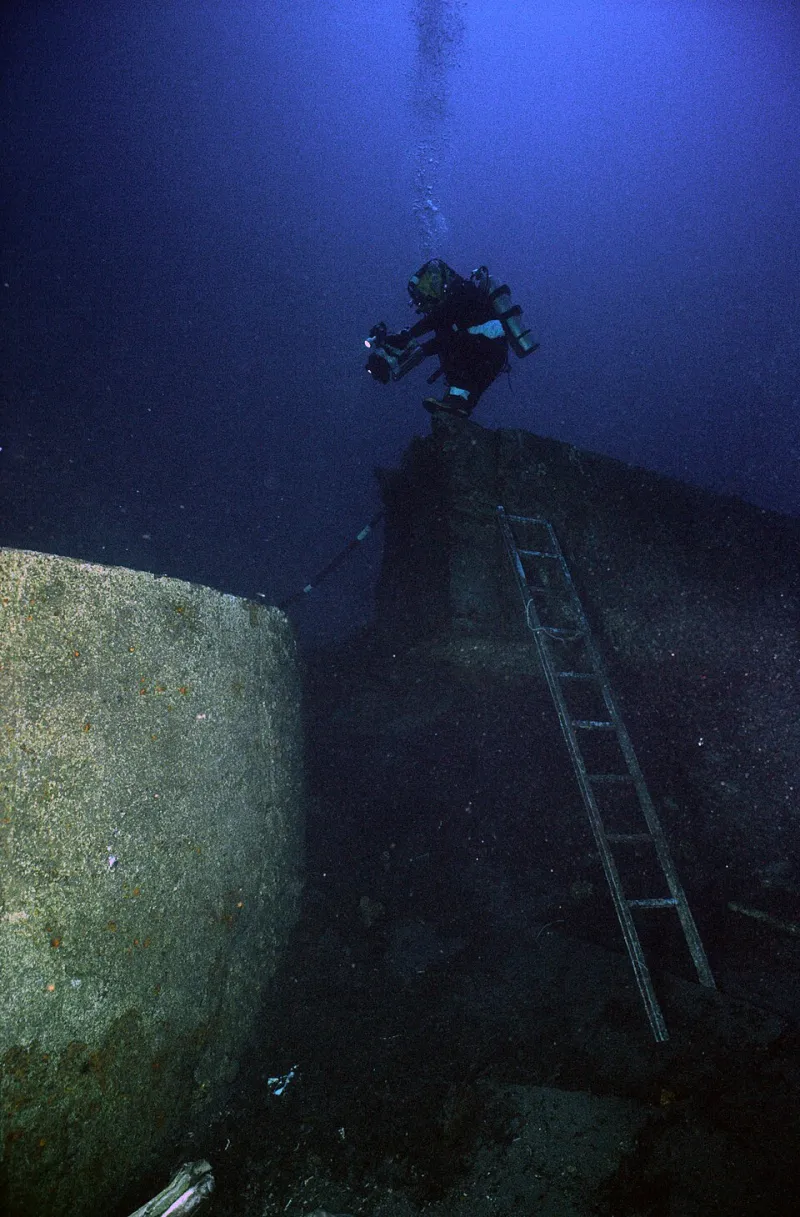
Photo: Peter Southwood, CC BY-SA 3.0, via Wikimedia Commons
In UK underwater adult editorial, the safety diver is often the most experienced person in the room and the least visible on paper. They may appear in a pool hire agreement, a risk assessment or a brief WhatsApp exchange the night before, but rarely on the call sheet, in the credit block or in the pre-shoot conversation about what the frame is actually trying to say. That is a quiet failure of production culture. The safety diver is not simply a condition of hire. They are a collaborator in breath, timing and trust, and the work is better when they are treated as such.
The role as it is usually written
Too often the role is recorded as “safety cover”: a name added to a document, a person standing at the deep end with a mask and a whistle, paid in cash and thanked at the door. On a small UK adult set, where the crew may number four or five, this administrative framing is understandable but short-sighted. Everyone present shapes the atmosphere, and atmosphere is not decoration in underwater work. It is the condition under which a performer decides how long to hold, how far to commit and whether to trust the image being made.
The safety diver sees things the camera does not. They see the first sign of fatigue, the change in a performer’s mouth, the moment a hand signal becomes ambiguous. They also see the creative intention from a different angle: not through a lens, but through the water. That perspective is editorial intelligence. It should be briefed, heard and credited.
What a credited role changes
A credit is not a substitute for pay, but it is a signal. When the safety diver is named on the call sheet, introduced to the performer and listed in the published credit block, the role becomes part of the production rather than an appendage to it. The performer knows who is watching. The crew knows who has authority to stop. The final editorial carries a clearer professional signature.
For adult work, this matters more than it might on a fashion or sports shoot. Adult intent depends on consent, control and the credible appearance of both. A performer who knows the safety diver’s name, has agreed signals with them and understands that a stop will be honoured without argument is freer to commit to the frame. That does not make the image safer in a merely technical sense. It makes the image braver. The held breath reads as chosen rather than endured, and the fetish or glamour register is strengthened rather than diluted.
Briefing before the first breath
The safety diver should be in the pre-shoot briefing, not simply at the poolside when the cameras are ready. Share the shot list. Explain the mood, the pacing and what “hold” means for this particular set. A three-second hold for a still frame is not the same as a repeated submersion for a short-film sequence, and the diver should not have to infer the difference from the director’s tone.
Sightlines deserve their own conversation. In UK pools, lane ropes, reflections, steam and the position of the camera operator can all interrupt a clear view. The person behind the monitor may have the best frame and the worst sightline. Agree who can see the performer’s face, hands and body at every point in the shot. A simple diagram on a clipboard is enough: where the performer will be, where the camera will be, where the diver will be, and which route to the surface remains clear.
Hand signals should be agreed with the performer, not imported wholesale from a generic diving course. “OK”, “hold”, “surface”, “stop” and “distress” need to be unambiguous under water and in poor light. The safety diver should also know which signals are creative and which are absolute. A stop is a stop. It is not a negotiating position.
Intervention without penalty
The most useful protocol is a no-fault stop. If the safety diver calls the shot, the shot ends. There is no “one more take” while the performer is still catching their breath, no suggestion that the moment can be rescued by a faster camera move. This protects the performer and the editorial. Adult work that depends on controlled tension cannot be built on a performer calculating whether it is worth arguing with the person responsible for their safety.
That protocol should be written into the brief and repeated verbally before the first submersion. It should also be visible in how the day is scheduled. If the safety diver is given no time to reset between setups, the intervention protocol becomes theoretical. Build the day around breath, not around the number of frames.
Paying for the second pair of eyes
The safety diver should be paid as crew, not reimbursed as an expense. That means a day rate, an invoice and a clear understanding of their insurance and tax position as a UK freelancer. If the budget is tight, the answer is fewer setups, not a discounted safety role. A production that cannot afford to pay the safety diver properly cannot afford the shoot it has designed.
Credit belongs alongside payment. Name the safety diver in the published credit block, on the production page and in any behind-the-scenes notes. This is professional courtesy, and it helps the next producer understand that the role is part of the editorial team rather than an anonymous poolside fixture. Credit does not replace a fee. It does confirm that the work was seen.
When the diver is part of the frame
Occasionally the safety diver will be visible, or their presence will shape the performer’s eye-line. This should be decided in the brief, not discovered in the edit. A performer looking to the diver rather than the camera can read as trust, watchfulness or surrender, depending on the set. In fetish editorial, that can be potent. But the diver should not be asked to perform a role they have not agreed to, and their primary duty must remain sightline and intervention. Safety is not a prop.
A short practical standard
A UK underwater adult set can adopt a simple standard without turning the day into a compliance exercise. Name the safety diver on the call sheet. Brief them on the shot list and the adult intent. Agree signals with the performer. Walk the sightlines before the first take. Write a no-fault stop into the protocol. Pay a day rate. Credit the role in the published work. None of this is bureaucratic excess. It is the minimum condition for calling the safety diver what they actually are: crew.
The surface is not the opposite of the image. It is part of how the image is made. Credit the person who holds it, and the work becomes more confident, more honest and more clearly adult in its intent.