What the Water Adds: Planning for Refraction in UK Underwater Glamour
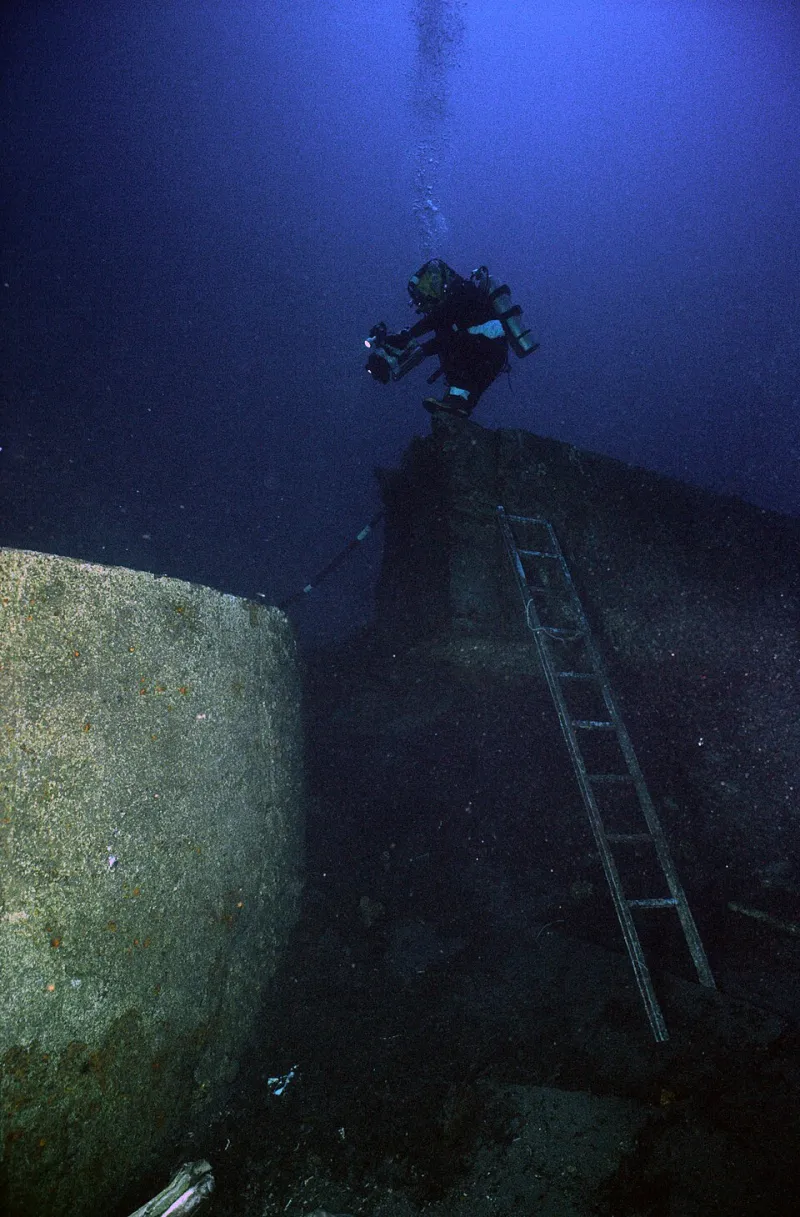
Photo: U.S. Navy photo by Chief Photographer’s Mate Eric J. Tilford., Public domain, via Wikimedia Commons
Underwater photography is often described as a battle against the elements. That framing is unhelpful. In UK underwater glamour and fetish editorial, the water is not an adversary to be defeated in post-production. It is an optical collaborator with firm views of its own. Refraction changes apparent distance, enlarges what sits closest to the port, shifts limbs across the waterline and can make two bodies appear closer than they are. The professional response is not to pretend this does not happen. It is to plan for it, frame it deliberately and keep the performer’s brief intact when the water starts adding details nobody agreed to.
The first distortion is distance
In a pool, tank or private studio, the camera does not see the body at the tape-measured distance. Water alters the path of light, and the practical result is that subjects often appear nearer and larger than they would in air. A frame composed as if the performer were two metres away may read as a much tighter portrait. That is useful when the editorial wants intimacy. It is less useful when the brief calls for clean full-body line and the water has quietly cropped the pose at the shins.
Photographers should therefore build in more surrounding space than instinct suggests, especially with wider lenses. The temptation with underwater work is to move close for clarity and contrast. That can work, but close range also exaggerates whichever limb is nearest the port. A hand extended towards the lens may become the dominant shape in the frame; a foot nearer the glass may look disproportionately large. The answer is not a single correct lens. It is to test the intended lens at the intended distance, with the intended waterline, and to judge the result on a monitor rather than through the viewfinder alone.
Depth, waterline and the body’s apparent length
Depth is not only a safety and comfort question. It is a compositional one. A performer positioned near the surface will be read differently from one working two or three metres down, even if the pose is identical. Shallow water gives more ambient light and a clearer relationship to the poolside; deeper water compresses contrast and makes the body appear to float in a different visual plane. Neither is inherently better, but the choice should be made before the shoot rather than discovered in the edit.
The waterline is especially important in UK editorial work, where split-level frames and surface glamour are common. Where the line crosses the body determines which parts are subject to one optical treatment and which to another. A limb crossing the surface can appear to bend or shift. A torso half-submerged can lose length. If the brief is a long, clean line, the waterline should be placed with that intention. If the editorial wants the body to feel transformed by the water, the waterline can be used as a deliberate cut. What it should not do is surprise the performer during review.
Lenses, ports and the limits of correction
Dome ports and flat ports behave differently, and no amount of retouching should be asked to rescue a frame that was optically misunderstood at capture. Dome ports generally preserve a wider angle of view and are common in underwater work, but edges can soften and close subjects can still distort. Flat ports can introduce magnification and restrict field of view, which may suit a tighter, more controlled composition but demands greater distance discipline. The point for editorial producers is simple: know which port is fitted, know what it does at the working distance, and test before the performer is in the water.
A useful habit is to shoot a short reference sequence at the start of the set. Ask the performer to stand or float in a neutral position, then capture the same frame at two or three distances. Review the images together. This establishes what the water is doing to proportion before the more complex poses begin. It also gives the performer a chance to see how refraction is representing their body, which matters in a genre where shape, line and implied contact carry so much of the meaning.
When the water invents a pose
The consent question is not separate from the craft question. Refraction can create apparent contact. A hand may seem to rest on a thigh when it is several centimetres away. A gap between two performers may close on camera. A submerged limb may appear to wrap or restrain when it is simply positioned nearby. In fetish editorial, where implied restraint, proximity and power are part of the visual language, those accidents are not minor. They can change the meaning of an image and misrepresent what the performer agreed to.
The remedy is procedural rather than theatrical. The performer’s brief should state what contact is permitted, what implied contact is acceptable and what must be avoided. The photographer should check the monitor for optical overlaps, not merely for focus and exposure. Where a frame suggests contact that did not happen and was not agreed, the angle, distance or limb position should be changed at capture. “The water made it look that way” is not a consent position. It is a reason to reshoot.
A working method for UK sets
On a UK pool or tank set, time is usually hired by the hour and the water does not pause for indecision. A practical method helps. Mark distances on the poolside where possible. Keep a note of lens, port and waterline for each look. Review frames with the performer at agreed intervals. Use the first ten minutes to establish optical baselines rather than chase the strongest image. And treat the monitor as a consent tool as well as a creative one: it shows what the camera is inventing, not just what the team intended.
Refraction is a rule of the medium. It will rewrite the body in small and large ways. The editorial choice is whether that rewriting is designed, discussed and agreed, or left to chance. In UK underwater glamour, the strongest frames are not the ones that deny the water’s influence. They are the ones in which the water’s influence has been planned, and the performer’s brief remains visible beneath it.