What the Water Leaves Behind: Chlorine, pH and the First Hour After a UK Underwater Adult Shoot
Underwater adult editorial asks performers to spend unusual amounts of time in water, often in makeup, often under warm lights, and often in repeated takes. The water is not a backdrop. It is a working environment. Yet on many UK shoots, chlorine levels, pH and temperature are left to the facility’s maintenance record while the production plan concentrates on lighting, wardrobe and shot lists. That division is understandable, but it is not adequate. Water chemistry affects the body in ways that are visible on camera and felt long after the last frame. In 2026, a credible UK underwater set should treat the pool test as a production document and the first hour after the shoot as part of the editorial day.
The pool log is not the whole story
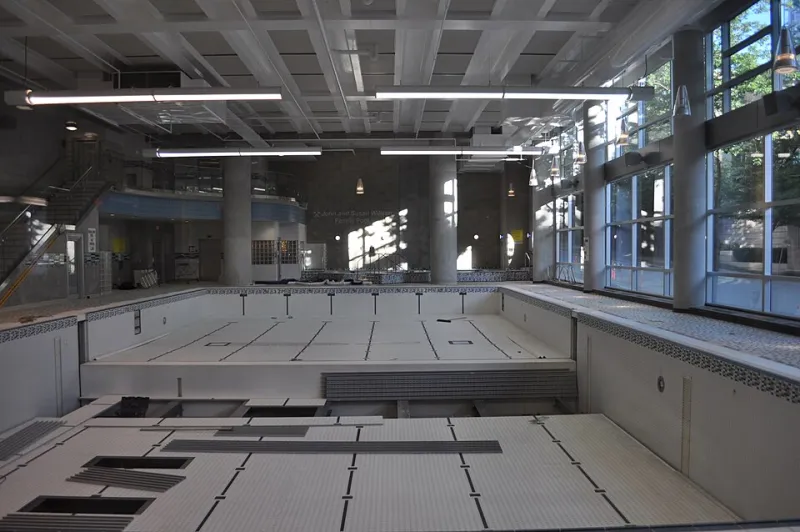
Hired leisure centres, private members’ pools, hydrotherapy tanks and converted private pools all arrive with their own regimes. A local authority pool may have a duty operator and regular testing; a private tank may be maintained by the owner with less formal record-keeping. Neither situation removes the producer’s interest in the water. The relevant question is not whether the pool is legally open to bathers. It is whether the water is suitable for the specific demands of an underwater editorial: long submersion, repeated breath-holds, heavy makeup, styled hair, sensitive skin and close camera work.
Producers should ask for the latest water test results before booking and again on the morning of the shoot. They should also carry independent test strips or a photometer, not to override the operator but to understand the conditions in the room. The results should be written into the call sheet alongside the safety briefing, the warm-water station and the contact details for the first-aider. A pool can be perfectly safe for a family swim and still be a poor environment for a performer spending two hours in and out of the water under studio lights.
The numbers that shape a performer’s day
Four measurements do most of the work. Free chlorine is the active disinfectant; it is necessary, but more is not automatically better. Combined chloramines are the by-products that produce the familiar pool smell and are more often associated with eye and respiratory irritation. pH determines how chlorine behaves and how the water feels on skin and eyes; a low pH is harsh, while a high pH can reduce disinfection efficiency. Temperature affects comfort, fatigue and how long a performer can work without becoming cold, especially in UK facilities where the air temperature may not match the water.
Salt systems deserve a note of their own. A saltwater pool is still a chlorinated pool; the salt cell generates chlorine. Performers who describe themselves as sensitive to chlorine may find salt systems more comfortable, but the production should not assume that the chemistry is gentler without checking the readings. Hard water is another UK variable. In areas with high mineral content, water can leave skin feeling tight and hair coarser, and it can interact with styling products and makeup removers. None of these factors is exotic. They are ordinary conditions that become editorial problems when they are discovered on the day rather than planned for in advance.
Skin, hair and eyes: the visible ledger
Chlorine and pH imbalance show up first in the eyes and on the skin. Redness, dryness and a stinging sensation are not merely cosmetic inconveniences; they affect a performer’s ability to relax, hold expression and consent to another take. Contact lenses are best avoided in underwater work unless the performer has a clear personal routine and saline on hand. Even without lenses, eyes should be rinsed with sterile saline after each block, not rubbed with a towel.
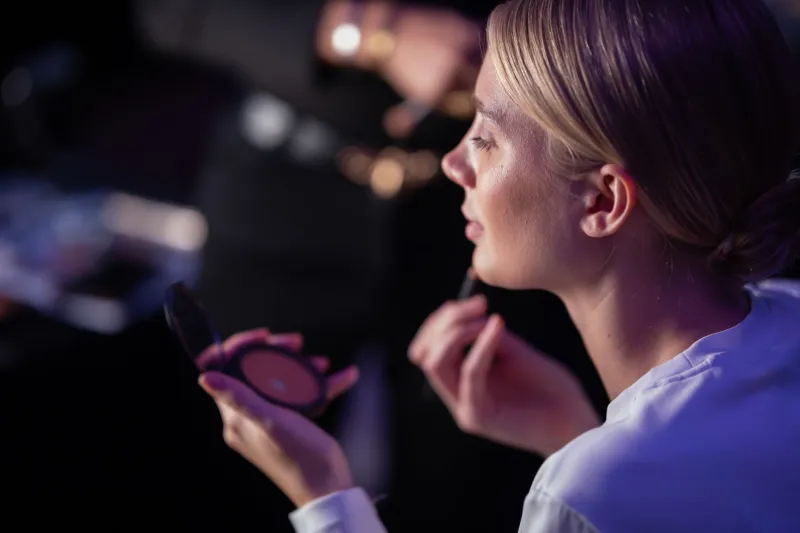
Makeup adds another layer. Long-wear products are designed to resist water, but they are not designed to resist chlorinated water indefinitely. The interaction between chlorine, makeup and repeated towelling can leave skin reactive. A patch test before the shoot is sensible, particularly for performers with known sensitivities. Hair should be pre-rinsed with clean water before the first submersion so that it absorbs less chlorinated water, and a leave-in conditioner can reduce tangling. These are small interventions, but they protect the continuity of the image as well as the performer’s comfort.
The after-shoot hour
The most neglected part of a UK underwater shoot is often the hour after the last take. By then the crew is packing, the performer is tired and the pool is being returned to its usual state. This is precisely when a simple, rehearsed recovery routine matters most. The aim is not a spa treatment. It is to remove pool water and product residue promptly, restore the skin’s barrier and check for any reaction before the performer leaves.
A practical routine begins with a lukewarm rinse within fifteen minutes of leaving the water. Hot showers can feel comforting but may increase dryness and redness. Eyes should be irrigated with saline if there is any irritation. Makeup should be removed with a pH-balanced cleanser rather than a harsh soap, and the face and body should be moisturised while the skin is still slightly damp. Hair should be washed with a clarifying or chelating shampoo where appropriate, followed by conditioner. The performer should change into dry, warm clothing and drink water. A named crew member should record any redness, stinging or breathing discomfort and check in with the performer the following day.
A UK producer’s checklist
Before booking, confirm the chlorination method, the latest test results, the pH range, the water temperature and the availability of private changing and shower facilities. Ask whether the pool has had recent shock treatment, since that can raise chlorine levels temporarily. On the day, test the water independently and record the readings. Set a rinse station with clean water, saline, towels, a gentle cleanser and conditioner. Schedule water blocks with dry breaks, and give the performer authority to stop without debate. After the shoot, follow the recovery routine and log any skin, eye or respiratory issues. If the readings are outside a comfortable range, if the pool smells strongly of chloramines or if the performer reports stinging, the correct response is to pause and adjust the plan. Water quality is not an abstract compliance issue. On an adult underwater set, it is part of the consent conversation.