Compatibility Before Immersion: A Material Protocol for UK Underwater Fetish Editorial
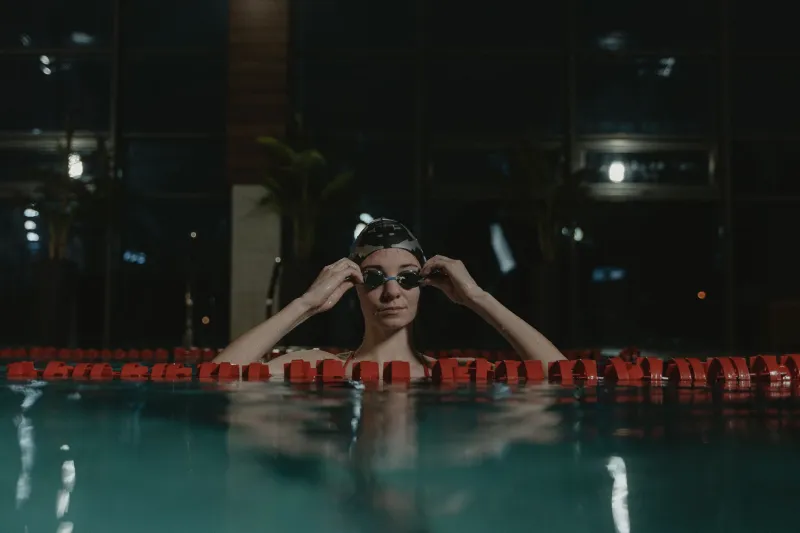
Underwater fetish editorial succeeds on atmosphere, but atmosphere is not the only thing in the water. Latex garments, lubricants, toys and pool chemistry form a small reactive system, and a UK shoot that ignores that system will eventually notice the consequences: cloudier water, slick filter media, degraded rubber and a cleaning log that cannot answer basic questions. The answer is not to strip the set of its fetish vocabulary. It is to establish material compatibility before anyone enters the pool.
Start with the water, not the wardrobe
A UK pool is a working chemical environment. Free chlorine, pH, total alkalinity, calcium hardness and cyanuric acid all influence how efficiently the water oxidises organic material. Every body in the pool adds sweat, skin cells, cosmetics and whatever else clings to the skin. A fetish shoot adds lubricant, dressing aids, latex polish, toy materials and sometimes hair or body products that would not normally appear in a leisure swim. The pool operator is entitled to know what is going in, and the producer is entitled to know what the water can tolerate.
Before the shoot, ask for the pool’s current test figures and its filtration type. Sand filters, cartridge filters and diatomaceous earth filters respond differently to oils and fine particles. A private tank or studio pool may run warmer than a public leisure pool, which can increase chlorine demand and make organic loading more visible. The material protocol should be written around those facts rather than around a generic assumption that “the chlorine will deal with it.”
Latex: durable, not indestructible
Latex is central to much fetish styling, and it is also one of the more sensitive materials in a wet set. Chlorinated water is not an instant destroyer, but repeated immersion accelerates ageing. Sunlight, heat, oils and abrasion all contribute. A garment that looks pristine on the poolside may show dulling, tackiness or micro-tears after a long shoot if it has not been rinsed and dried properly.
The practical rule is to treat latex as a costume that needs its own continuity plan. Bring more than one piece where the editorial depends on a specific silhouette. Rinse after every immersion in fresh, cool water. Dry flat and away from direct heat. Avoid storing damp latex in a closed bag between takes. If a dressing aid is used, confirm its compatibility with the garment manufacturer’s guidance rather than relying on poolside folklore. Silicone-based dress aids are common in latex care, but formulations vary, and the same product that helps a performer into a catsuit may leave a residue that the pool’s filtration system has to manage. Water-based aids are easier to rinse away but may need reapplying. Neither choice is automatically correct; the correct choice is the one documented for that garment and that water.
Lubricants: the quiet variable
Lubricant is where material compatibility most often becomes a pool-management issue. Water-based lubricants are generally easier to rinse from skin and fabric, but many contain glycerin or other humectants that can leave a tacky film and add to organic load. Silicone-based lubricants are long-lasting and water-resistant, which makes them attractive for wet work, but they are not water-soluble. They can leave a persistent slickness on pool surfaces and may be difficult for filtration media to clear. Oil-based products should be treated with particular caution around latex and around pool systems.
For a UK underwater fetish shoot, the sensible protocol is to select one or two lubricants in advance, check them against every material they will contact, and use them sparingly. A patch test on a small area of latex, a silicone toy and the performer’s skin is not excessive. It is basic material diligence. Keep the original containers so that ingredients and batch information are available. If the shoot includes toys, decide whether lubricant will be applied poolside or in a dry area and make sure the difference is reflected in the cleaning plan.
Toys and hardware: rating versus reality
A toy described as waterproof is not necessarily rated for prolonged immersion. IP ratings distinguish between splashing, temporary immersion and continuous immersion, and a motorised toy that survives a bath may not survive a chlorinated pool with a performer moving it through the water. For editorial purposes, non-porous materials such as silicone, glass and stainless steel are easier to clean and less likely to absorb pool water. Porous materials, including some jelly rubber and PVC blends, are poor candidates for immersion because they can trap water and cleaning agents.
Mechanical parts need their own check. Battery compartments, seams and charging ports are entry points. If a toy is not explicitly rated for the depth and duration involved, keep it out of the water or use it only in the dry half of the set. This is not a concession to timidity; it is how a producer avoids a failed prop mid-take and a performer having to manage an unexpected device failure.
Consent, cleaning and the paper trail
Material compatibility is also a consent issue. Performers should know what products will contact their skin, what has been patch-tested, and what cleaning has taken place between uses. A simple material sheet can list garments, lubricants, toys and cleaning agents, with columns for manufacturer guidance, patch-test result and post-shoot treatment. That sheet belongs with the compliance file, not in someone’s memory.
After the shoot, clean non-porous toys according to manufacturer instructions, dry them fully, and inspect latex for tears or weak points. Rinse garments in fresh water, dry them properly and record any damage. Poolside surfaces should be rinsed so that lubricant residue does not become a slipping hazard or a filter burden. If the pool operator has asked for specific disposal or dilution procedures, follow them.
Keep the edge, lose the guesswork
A material protocol does not make an underwater fetish shoot less explicit or less atmospheric. It makes the atmosphere sustainable. The visual language of latex, water and restraint depends on kit that behaves predictably, water that stays clear and records that stand up to scrutiny. In 2026, UK producers have enough specialist knowledge to plan compatibility before immersion. The water will still do the dramatic work. The materials simply need to be chosen with the same seriousness as the frame.