The Tress Test: Hair Continuity for Repeated Submersion on UK Underwater Sets
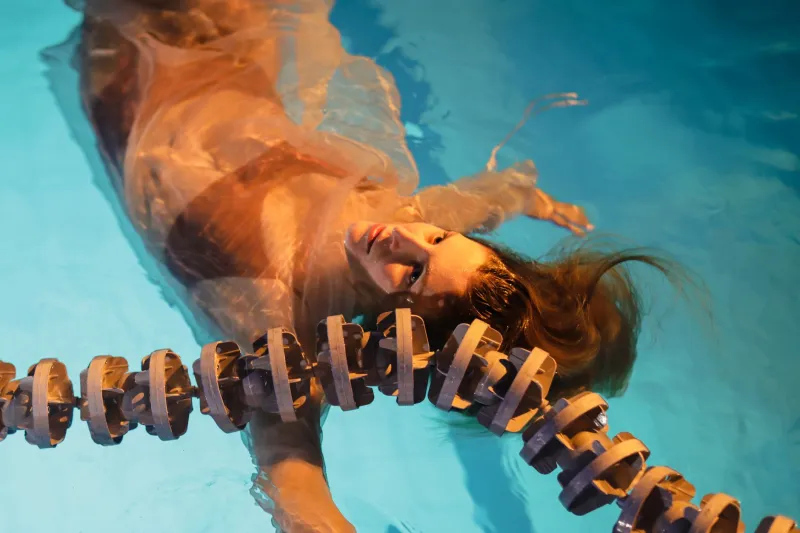
On a UK underwater set, hair is rarely just hair. It is drag, buoyancy and continuity. It is the difference between a clean silhouette and a face full of loose strands, between a deliberate fetish texture and a tangle that pulls at the scalp. It is also a safety consideration: a loose extension can catch on equipment, a heavy wig can shift during a breath-hold, and an ill-chosen adhesive can leave a performer sore before the first setup is complete. Yet hair often receives less production planning than lighting or wardrobe. A workable hair protocol begins before the pool is booked and continues after the last towel has been folded.
Begin with the head, not the hairstyle
The first conversation should be with the performer, not the reference board. Ask about natural hair condition, scalp sensitivity, previous reactions to chlorine, salt water and adhesives, and whether a wig or extensions are acceptable at all. Some performers will have had difficult experiences with glued lace fronts in heated pools; others will know that their hair takes hours to dry. These are production facts, not inconveniences.
Patch tests for adhesives and bonding tapes should be carried out well before the shoot day, ideally at least forty-eight hours in advance. The result should be recorded alongside the usual model release and call-sheet information. If a style depends on tension, pins or heavy product, the performer should try it in dry conditions first. A style that looks convincing in a mirror may become uncomfortable after ten minutes of immersion.
Foundations: wigs, extensions and natural texture
For wigs, security should come from structure before adhesive. Adjustable straps, a well-fitted cap and a silicone grip band will usually do more for stability than a thick layer of glue. If adhesive is used, choose a formulation suited to repeated wetting and confirm that the remover is on site. A full-lace wig may give a convincing hairline, but the delicate front can lift after repeated submersion; a reinforced cap or a style with a concealed hairline may be the more practical choice for a long day.
Extensions require similar scepticism. Clip-in pieces can slip under drag, and tape bonds may soften in warm water. For repeated submersion, professionally fitted sewn-in or bonded extensions are generally more reliable, provided the performer is experienced with them. Loose strands should be minimised and counted. If a piece is removed between takes, it should go into a labelled bag rather than a general kit box.
Natural hair deserves its own plan. Pre-soaking clean hair in fresh water before entering the pool can reduce the amount of chlorinated water the fibre absorbs. A light leave-in conditioner can help, but heavy oils and butters should be used sparingly because they can cloud the water, affect filtration and leave a slippery film on poolside surfaces. Braids, twists and banded roots can provide a secure base for wigs and keep long hair out of the face. They should not be so tight that they restrict neck movement or cause discomfort during a breath-hold.
UK water conditions vary. Hard water areas can leave mineral deposits and make some products difficult to rinse out, while leisure-centre pools may run at different pH and chlorine levels from private tanks. A final rinse with fresh, ideally filtered, water is a sensible habit rather than a luxury.
The test immersion
Before principal photography, schedule a short test in the actual water. This need not be a full rehearsal, but it should be timed. Check how the hair behaves on entry, at depth and on resurfacing. Does the fringe fall into the eyes? Does a long ponytail float across the face and obscure the eye-line? Does the wig shift when the performer turns? Does any piece catch on a prop or ladder rail?
The safety diver should observe the test and note anything that could become a distraction or hazard. A maximum submerged duration for the style should be agreed, along with a reset point. If the hair requires two hands and a mirror to correct, it is not a quick reset and should be scheduled accordingly. The test is also the moment to confirm that the performer can signal clearly with the style in place.
Chlorine, salt and the between-takes routine
After each submersion, rinse the hair with fresh water and blot rather than rub. A wide-tooth comb, worked from the ends upwards, will remove tangles with less breakage than a brush. A small amount of leave-in conditioner can be reapplied, but the hair should not be left dripping product onto the poolside or into the water.
Chlorine is cumulative. A chelating or clarifying shampoo at the end of the day is more useful than repeated harsh washing between takes. Salt water has a different effect: it can add texture, but it also dries the hair and can leave extensions stiff. A fresh-water rinse and a light conditioner should follow any saltwater work. If the pool has a strong chloramine smell, the ventilation and water chemistry should be raised with the venue before the next session.
Between takes, keep a dry hair station away from splash zones. A hooded towel or a silk scarf can help preserve warmth, since wet hair accelerates heat loss. For wigs, remove them when possible and dry the cap thoroughly; alternating two prepared wigs is often more efficient than trying to dry one in a hurry. Pins should be counted in and counted out. Metal pins can corrode and should be avoided in favour of coated or plastic alternatives, secured so that they cannot work loose.
Finishes: sleek, wet-look and deliberately messy
A sleek wet-look finish is best achieved with restraint. Water-based gels and pomades can give the required sheen, but too much product will slick the pool surround and may affect water clarity. The style should be built with a combination of product and hidden structure: small braids, coated pins, a secure band or a discreet net. The aim is a look that can be re-formed after resurfacing with a mist of water and a few seconds of combing, not a sculpture that collapses on the first duck-dive.
Deliberately messy fetish textures are equally dependent on preparation. Sea-salt sprays and texturising mists can help, but they should be tested for how they behave when wet and how they feel on the scalp. A dishevelled look can be planned: leave a few face-framing strands free, secure the rest, and accept that the water will do some of the styling. The performer should be comfortable with hair across the face only if the safety diver retains a clear view and the performer can still signal.
Comfort, consent and aftercare
Hair pulling is distracting and can become painful. The performer should know that a stop signal applies to hair as much as to breath. No style should restrict breathing or neck movement, and no wig should be so heavy that it changes the way the head sits in the water. If a look requires constant adjustment, it is costing the performer attention that should be directed to the scene.
After the shoot, the hair should be washed, the scalp checked and any irritation noted. Extensions and wigs should be cleaned according to the manufacturer's instructions and dried fully before storage. A simple aftercare note in the production file will help the next booking start from knowledge rather than guesswork.
Document the reset
A hair continuity sheet should record products used, pin counts, style notes, drying times and reset times. Photographs from several angles before and after immersion are more useful than memory. Budget for a hair stylist or a trained assistant who can work quickly and quietly at the poolside. On UK sets, where hire windows are tight and travel can eat into the day, a hair reset that takes twenty minutes instead of five will shape the schedule.
The tress test is not glamorous, but it is editorial craft. Hair that holds its shape under repeated submersion gives the performer freedom to concentrate on the work. Hair that does not becomes a distraction for everyone. A written protocol, a test immersion and a calm reset station are modest investments against the cost of a lost setup or an uncomfortable performer.